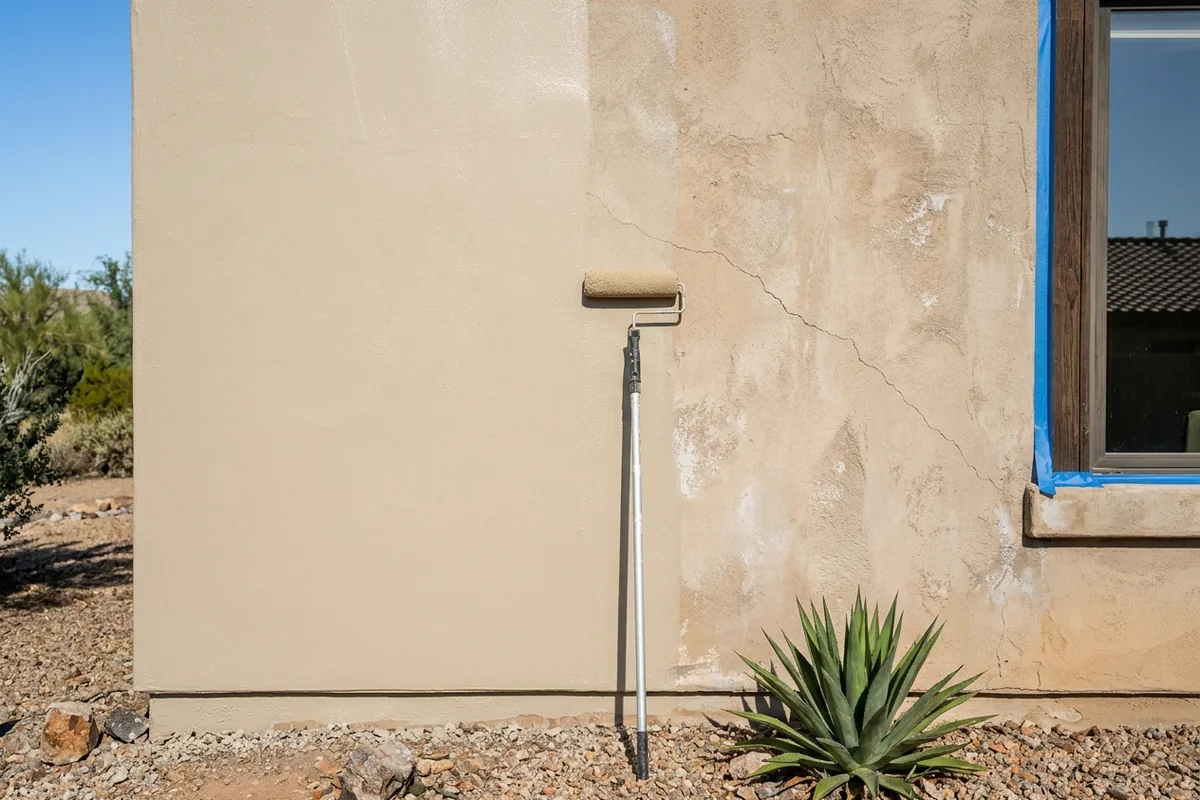
Elastomeric Paint on Stucco: Is It Worth It for Your Tucson Home?
Elastomeric paint is worth it on stucco when the walls have hairline cracks, take hard sun or wind-driven rain, and are otherwise dry and sound. It is the wrong choice when water is already getting into the wall, when cracks are wider than about 1/16 inch, or when you want the option of a cheaper standard repaint later.
Elastomeric coatings are a real upgrade in the right situation and an expensive mistake in the wrong one. This guide explains what they are, how they compare with the 100% acrylic exterior paint most stucco homes get, and how to tell which one your walls need.
What Elastomeric Paint Is (and How It Differs From Regular Exterior Paint)
Elastomeric paint is a very thick, flexible acrylic coating made for masonry surfaces such as stucco, concrete and block. Once it cures, it behaves more like a rubbery skin than a layer of paint: it stretches as the wall expands and contracts, and it can close over very fine cracks.
Three things set it apart from regular exterior paint:
- Film thickness. Paint maker Dunn-Edwards describes elastomeric wall coatings as roughly six to eight times thicker than regular paints.
- Coverage. Because so much more material goes on the wall, a gallon covers far less. The same Dunn-Edwards guidance puts elastomeric at about 50 to 90 square feet per gallon, compared with 200 to 400 for regular paint.
- Crack bridging. Elastomeric coatings are rated to bridge hairline cracks, typically up to 1/16 inch. Valspar lists the same limit on its masonry, stucco and brick elastomeric paint.
That thickness is where both the benefits and the drawbacks come from.
Elastomeric vs. Standard Acrylic on Stucco: Side by Side
| Elastomeric coating | Standard 100% acrylic exterior paint | |
|---|---|---|
| Film build | Very thick, rubber-like film | Thin, flexible paint film |
| Hairline cracks (under 1/16″) | Bridges and seals them | Covers them, but they often show through again |
| Wind-driven rain | Strong waterproofing on sound walls | Sheds water, less barrier effect |
| Coverage per gallon | About 50 to 90 sq ft | About 200 to 400 sq ft |
| Material and labor | Higher: more gallons, heavier application | Lower |
| Expected life on Arizona stucco | About 10 to 12 years when properly applied | Shorter; see our desert lifespan guide |
| Texture | Can soften fine stucco texture | Keeps the texture crisp |
| Future repaints | Needs elastomeric or a product approved over it | Most quality exterior paints work |
The lifespan figures come from our own guide on how long exterior paint lasts in the Arizona desert, which also covers what each paint type costs per gallon. Real results depend on prep, film thickness and sun exposure.
When Elastomeric Is a Good Fit
Elastomeric usually earns its higher price when most of these are true:
- The stucco has many hairline cracks. Fine map cracking from thermal cycling is common on Tucson stucco. If the cracks are under 1/16 inch, an elastomeric film can bridge them instead of letting each one telegraph through. Not sure what you have? Here is how to tell a hairline crack from one that needs repair.
- The walls take the weather. South- and west-facing walls that bake all afternoon, or walls that get hit by monsoon rain sideways, benefit most from a thick, waterproofing film.
- The wall is dry and the water details are sound. Roof edges, parapet caps, window flashing and penetrations are sealed, and there is no white powder (efflorescence) or damp staining on the stucco.
- You plan to stay. The longer service life pays off over a decade or more, not over a two-year sale horizon.
- The color is allowed. If you live in an HOA, confirm your color is available in an elastomeric product before you commit.
When It’s the Wrong Choice
Skip elastomeric, or fix something else first, when:
- Cracks are wider than about 1/16 inch. No coating, however flexible, is a structural repair. Medium cracks need proper patching before any paint, and cracks over 1/4 inch call for a structural assessment.
- There are signs of water inside the wall. Efflorescence, bubbling paint, soft or crumbling stucco and stains below roof edges all mean water is moving through the wall. A thick coating will not fix that, and it can make it worse.
- The stucco is new. Fresh stucco has to cure before it is coated. Valspar, for example, says new concrete or stucco must cure for a month before a finish goes on.
- You love the stucco texture. A heavy elastomeric build can fill in fine sand-finish texture. On smooth or lightly textured walls the difference is easy to notice.
- The budget is tight and the walls are in good shape. A quality 100% acrylic exterior paint over well-prepped, crack-free stucco is a perfectly good system for many Tucson homes.
The Moisture Question: Why Water Has to Be Stopped First
Modern elastomeric wall coatings are made to let some water vapor escape. But they slow drying compared with thin paint, and they cannot keep up with liquid water coming in from behind.
Building Science Corporation documented exactly this failure in a forensic investigation of a blistered elastomeric coating on stucco. The coating was applied to stop water problems, but rain was entering through poorly detailed parapet caps faster than it could dry out through the coating, and the coating blistered.
The lesson applies directly to Tucson’s flat-roof homes. If you have parapet wall leaks, cracked roof edges or failed window caulking, fix those first. Coat only when the wall can dry.
Applying Elastomeric in Tucson: Heat, Monsoons and Cure Time
Elastomeric coatings are less forgiving than regular paint, and Tucson’s climate narrows the working window:
- Heat limits. Product temperature ranges matter. Valspar’s elastomeric, for example, is rated for application between 35°F and 90°F. On many Tucson days from late spring into early fall, sun-facing walls are far hotter than that by late morning, so crews have to work early, follow the shade, or wait for cooler months.
- Rain timing. A thick film needs time to dry before rain hits it. The same product lists a 24-hour recoat time at 77°F and 50% humidity. Afternoon monsoon storms make July through September a poor time to schedule an elastomeric job.
- Film thickness is the whole point. Elastomeric is applied heavily, usually sprayed and back-rolled, in at least two coats. Stretching it thin to cover more wall gives you an expensive paint that cannot bridge cracks.
- Prep is the same as any good paint job, only stricter. Clean, repair, treat efflorescence and let patches cure before the first coat.
For most homes, fall through spring is the best season for exterior stucco coatings in Tucson.
The Long-Term Commitment
Once a house is coated with elastomeric, future repaints are limited. Standard paint does not always bond or perform well over that flexible film, so the next repaint usually means elastomeric again or a product the manufacturer approves for use over it. Removing elastomeric to start over is a major job.
That is why the decision deserves a close look at your walls first. If you are weighing elastomeric against a standard repaint, our team provides exterior painting and stucco repair in Tucson and can look at the cracks, moisture signs and exposure on your home before recommending a system. Call (520) 325-5800 or request a free estimate.
Frequently Asked Questions
Is elastomeric paint good for stucco?
Yes, when the stucco is sound and dry and has hairline cracks or heavy weather exposure. It is not a fix for wide cracks or for water already getting into the wall.
How long does elastomeric paint last on stucco in Arizona?
Properly applied at full thickness, elastomeric coatings typically last about 10 to 12 years on Arizona stucco. Sun exposure, prep and film thickness all change that number.
Can you paint over elastomeric paint later?
Usually only with another elastomeric coating or a product the manufacturer approves over it. Plan on that before you choose elastomeric.
Does elastomeric paint need a primer on stucco?
It depends on the product and the wall. New, previously unpainted, chalky or heavily patched stucco often needs a masonry primer or sealer first. Follow the product data sheet.
Is elastomeric paint waterproof?
It resists wind-driven rain on the surface of a sound wall. It does not stop water that enters from behind, such as through a parapet cap or roof edge.